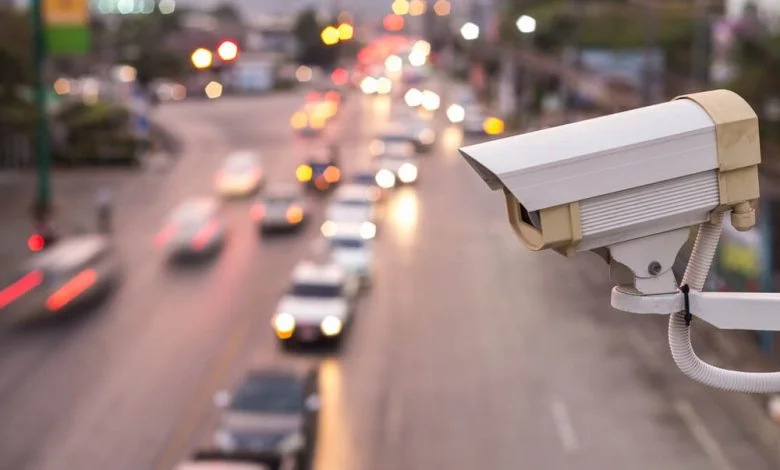
Zanzibar's roads now have cameras that spot speeding, phone use and missing helmets, then message the vehicle owner. The same technology, on a smaller scale, protects shops, hotels and offices.
What Zanzibar rolled out
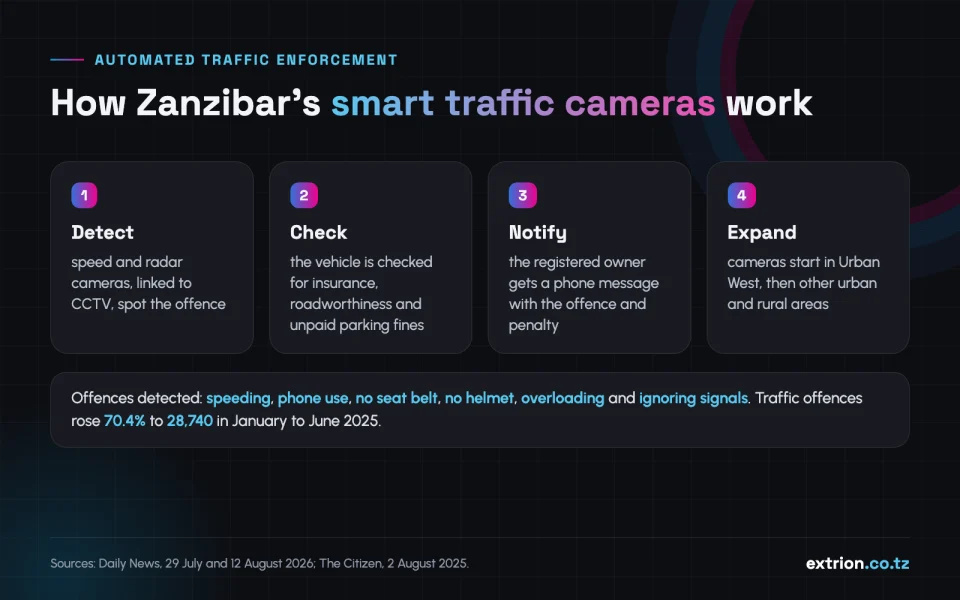
In July 2026 Zanzibar's Minister for Infrastructure and Transport, Dr Khalid Salum Mohamed, announced an automated traffic enforcement system. It uses speed and radar cameras integrated with CCTV surveillance, after a month-long pilot that began on 1 July.
The cameras detect:
- Speeding.
- Using a mobile phone while driving.
- Not wearing a seat belt.
- Riding a motorcycle without a helmet.
- Carrying too many passengers, known locally as mshikaki.
- Ignoring traffic signs and signals.
The system also flags vehicles that are unroadworthy, uninsured or have unpaid parking fines. When it detects an offence, the registered owner receives a message on their phone describing the violation and the penalty. In the Minister's words, "The objective is to save lives, reduce road crashes."
Why now
Zanzibar Police reported 28,740 traffic offences between January and June 2025, up from 16,870 in the same period of 2024: a rise of 70.4%. North Unguja and Urban West recorded the most cases.
In August 2026 President Dr Hussein Ali Mwinyi said the government had started installing surveillance cameras in the Urban West Region and would extend them to other urban and rural areas. He linked the move to the rise in accidents caused by breaking traffic laws and ignoring road signs. Officials also expect automated enforcement to reduce human error and the room for corruption in manual policing.
The technology behind it
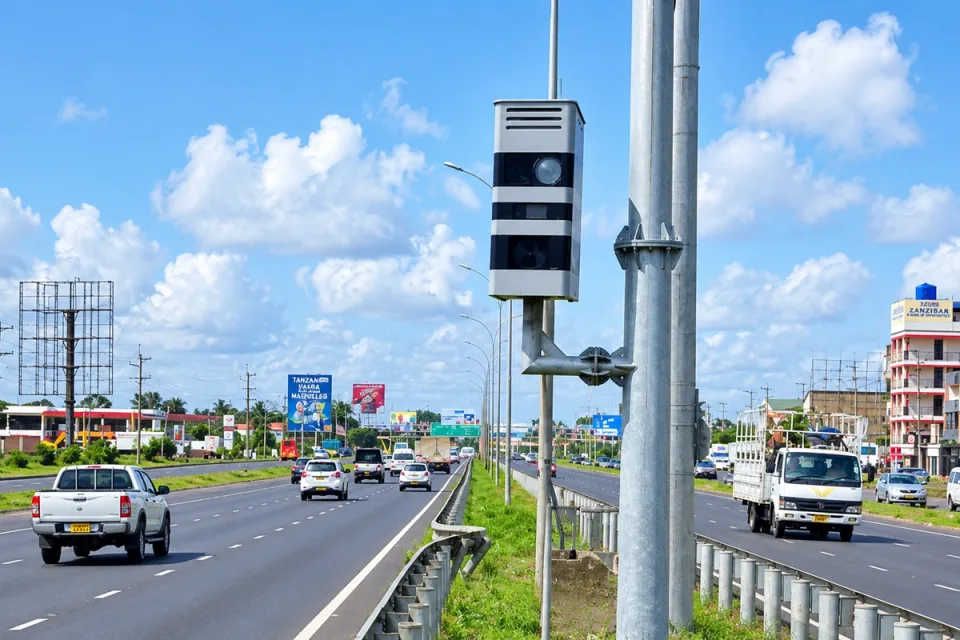
A city camera network is the same building blocks as a business CCTV system, at a larger scale:
- Cameras chosen for the job: wide views for activity, narrow views for number plates and faces. See CCTV cameras explained.
- A reliable network to carry video from every camera, often over fibre and PoE switches.
- Recording and storage sized for how long footage must be kept. Try our CCTV storage calculator.
- Software that turns video into events, alerts and records, and links them to other systems.
Lessons for business camera systems
- Decide what each camera must capture before you buy it: general activity, a face or a number plate. Our camera type guide helps.
- Cover entrances, cash points, car parks and gates, not just open spaces. See our CCTV system design guide.
- Plan the network: cameras need bandwidth, power over Ethernet and a backup link. Check your load with the PoE budget calculator.
- Secure remote viewing with strong passwords and updates. See viewing CCTV on your phone safely.
- Treat recordings as personal data under the Personal Data Protection Act: limit access and keep them only as long as needed.
How Extrion can help
Extrion designs, installs and supports CCTV, access control and the networks they run on across Zanzibar and Tanzania. See our security service or talk to us.
Frequently asked questions
What do Zanzibar's traffic cameras detect?
Speeding, phone use while driving, no seat belt, motorcycle riders without helmets, carrying too many passengers and ignoring traffic signs and signals. They also flag uninsured or unroadworthy vehicles and unpaid parking fines.
How are drivers told about an offence?
The registered vehicle owner receives a message on their mobile phone describing the violation and the penalty.
Can a business use similar camera technology?
Yes. Modern CCTV can record number plates, send alerts and be viewed securely from a phone. The key is choosing the right cameras, positions, storage and network for your site.
Still stuck, or want more detail?
Ask for clarification, tell us a problem this did not solve, or suggest a topic. An engineer reads every message, and we use them to improve the Knowledge Center.
Last updated
Talk to Extrion about this topic
Book a consultation and we will help you map a practical next step.