Tanzania has a ten-year plan to make technology a driver of productivity across the economy. Here is what the framework sets out, the progress reported so far, and how organisations can prepare.
A ten-year national plan
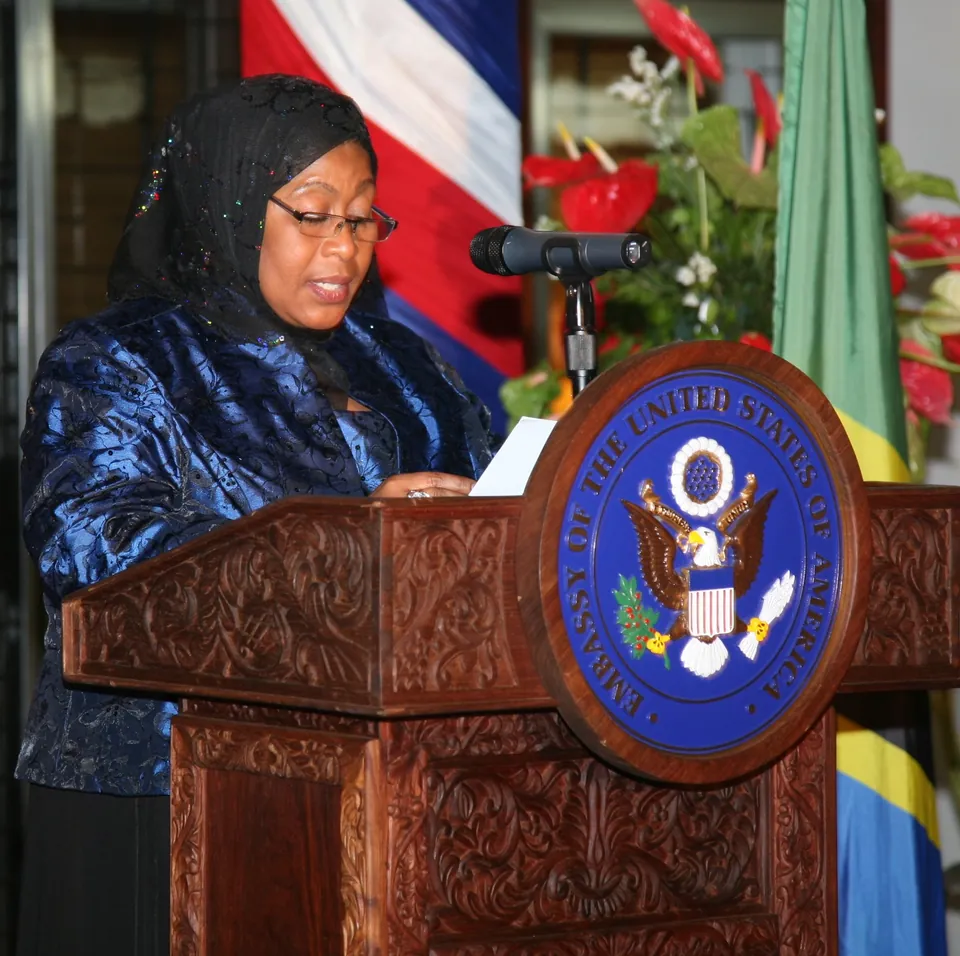
The Digital Economy Strategic Framework 2024–2034 was launched by President Samia Suluhu Hassan in 2024. It positions ICT as a driver of productivity across agriculture, health, finance, education and industry, and rests on three broad pillars: infrastructure, skills and innovation, and financial inclusion through technology. It also encourages public-private partnerships in data centres, fintech and digital public services.
The headline targets
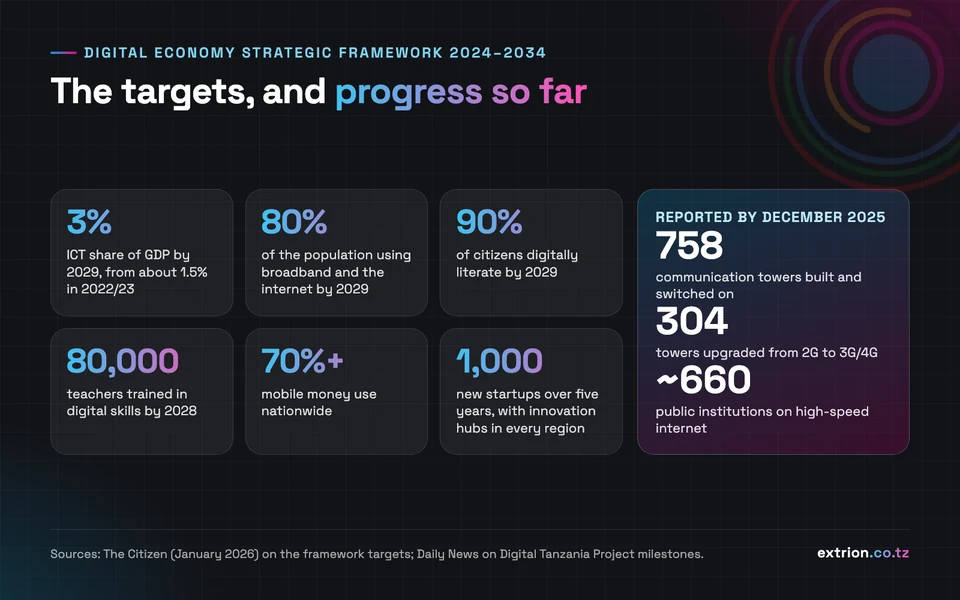
According to reporting on the framework by The Citizen, the main targets include:
- Raising the ICT sector's share of GDP to 3% by 2029, from about 1.5% in 2022/23.
- Broadband and internet use by 80% of the population by 2029.
- Digital literacy for 90% of citizens by 2029.
- 80,000 teachers trained in digital skills by 2028.
- Mobile money use above 70% nationwide.
- Innovation hubs in every region and at least 1,000 new startups over five years.
Over the decade, the digital economy is projected to add more than USD 1.1 billion to GDP.
Progress reported so far
The ministry reported that by December 2025, 758 communication towers had been built and switched on, 304 towers had been upgraded from 2G to 3G/4G, and about 660 public institutions had been connected to high-speed internet.
Much of this work runs through the Digital Tanzania Project, a USD 150 million World Bank-financed programme approved in 2021. It covers digital laws and regulation, connectivity, and digital platforms and services, and aims for mobile broadband coverage of more than 75% of the population.

Plays from YouTube when you press play.
The latest connectivity figures are in our article on 5G and internet in Tanzania.
What it means for businesses
National targets become everyday changes: more customers online, more payments made digitally, more government services that expect digital records, and more competition from businesses that serve customers through their phones.
Organisations that plan now can turn this into an advantage rather than a catch-up exercise.
Five practical steps
- Make your website and services work well on mobile phones, where most Tanzanians go online.
- Accept digital payments and connect them to your accounting, not just to a phone.
- Put your core records into systems that can talk to each other, instead of separate spreadsheets.
- Invest in staff digital skills, so new systems are used properly.
- Treat security and data protection as part of every project. See our PDPA checklist.
See where your organisation stands with our free digital readiness quiz.
How Extrion can help
Extrion helps organisations in Zanzibar and across Tanzania plan and deliver practical digital projects, from web platforms and mobile solutions to staff training. Talk to us about your next step.
Frequently asked questions
Who launched Tanzania's Digital Economy Strategic Framework?
President Samia Suluhu Hassan launched the Digital Economy Strategic Framework 2024–2034 in 2024.
What is the ICT target in the framework?
The framework aims to raise the ICT sector's share of GDP to 3% by 2029, from about 1.5% in 2022/23.
What is the Digital Tanzania Project?
It is a USD 150 million World Bank-financed project, approved in 2021, to expand broadband and digital public services across Tanzania.
Last updated
Talk to Extrion about this topic
Book a consultation and we will help you map a practical next step.